
HEAVIER THAN AIR
photographs printed on silk 
VERSSchmuggel Belarus Deutschland. Galerie intershop / 2022. Leipzig, DE
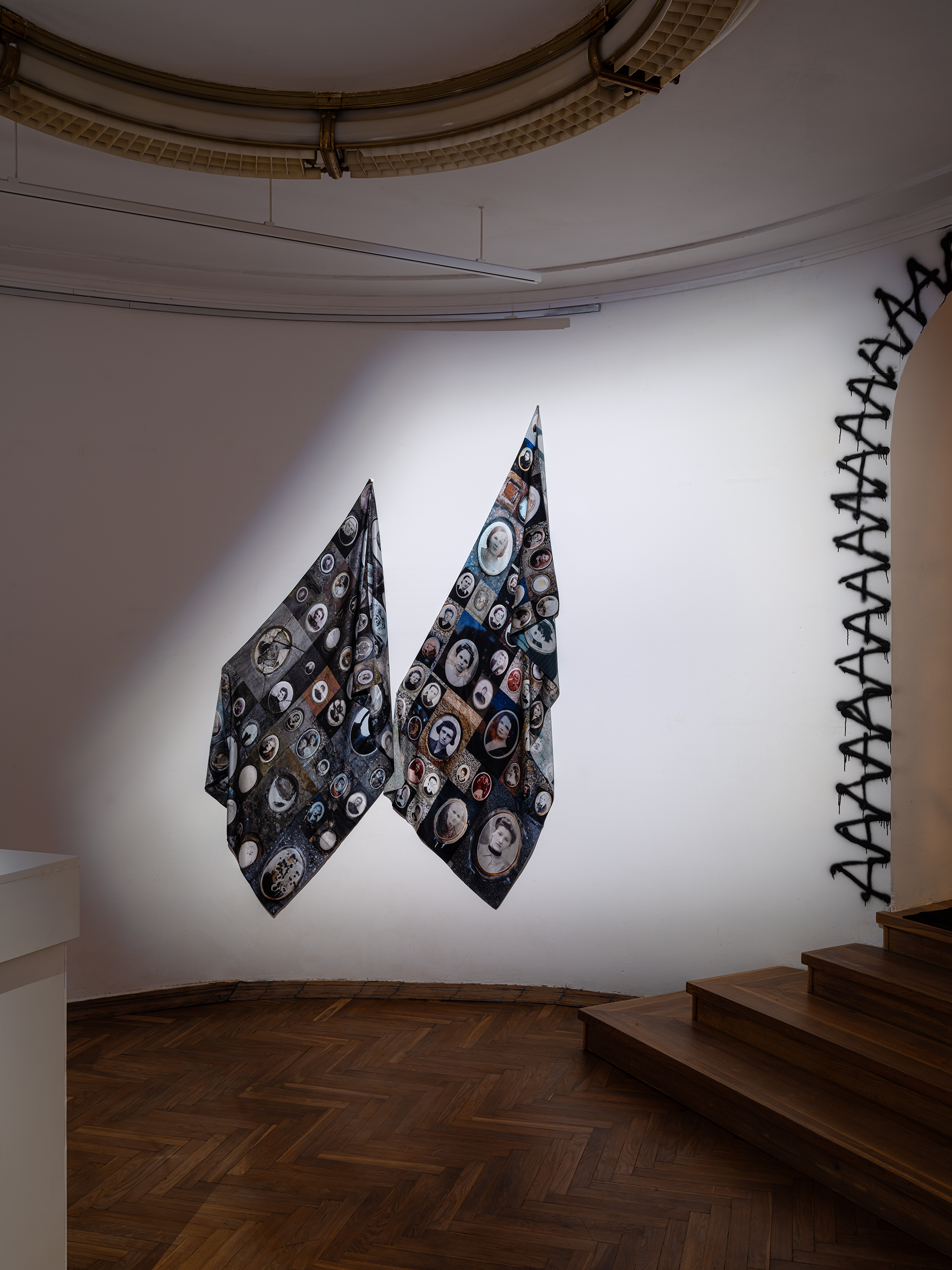
Un-packing: Memory Gaps
/ 2025. Teatr Dramatyczny. Warsaw. PL

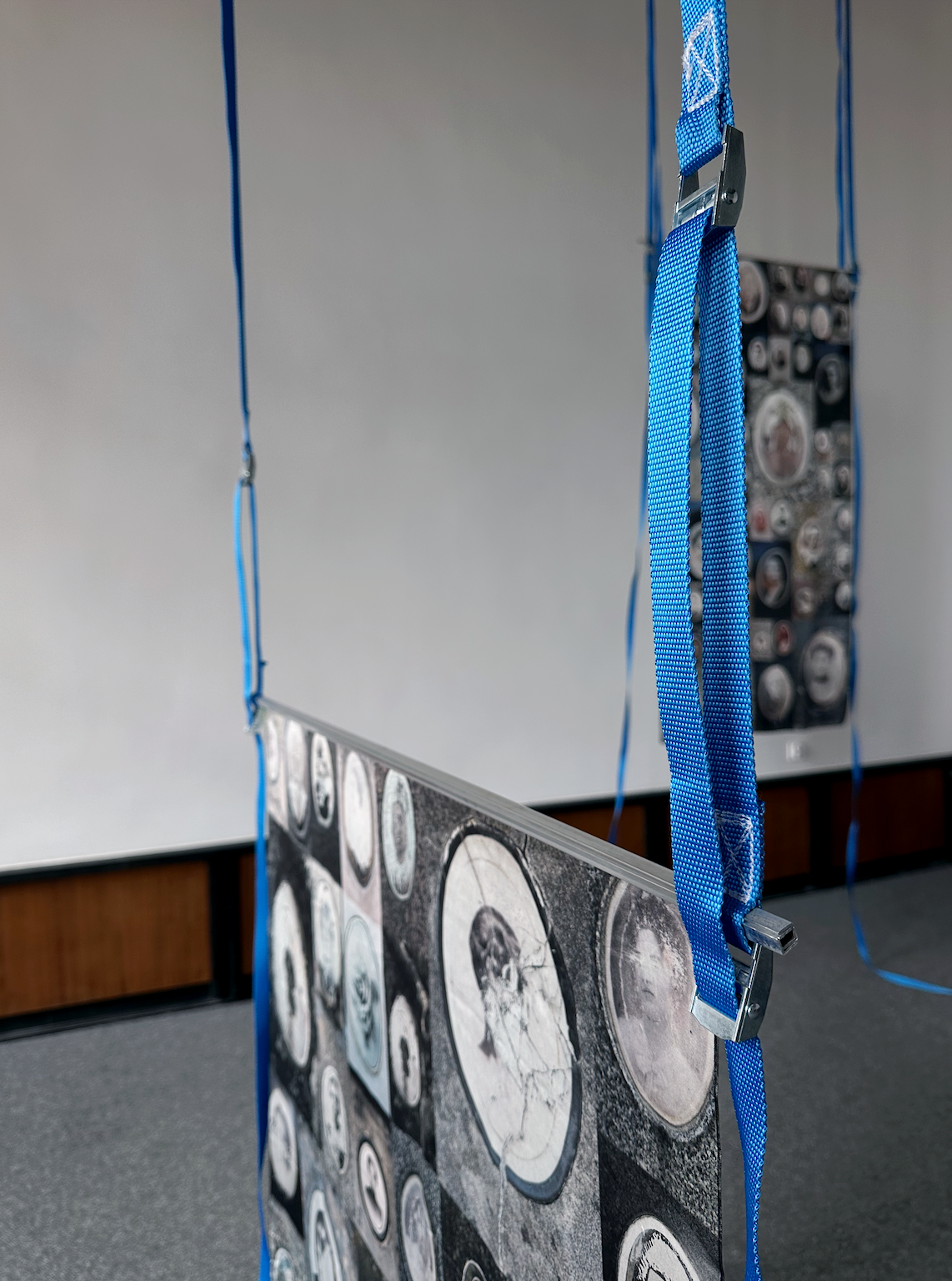
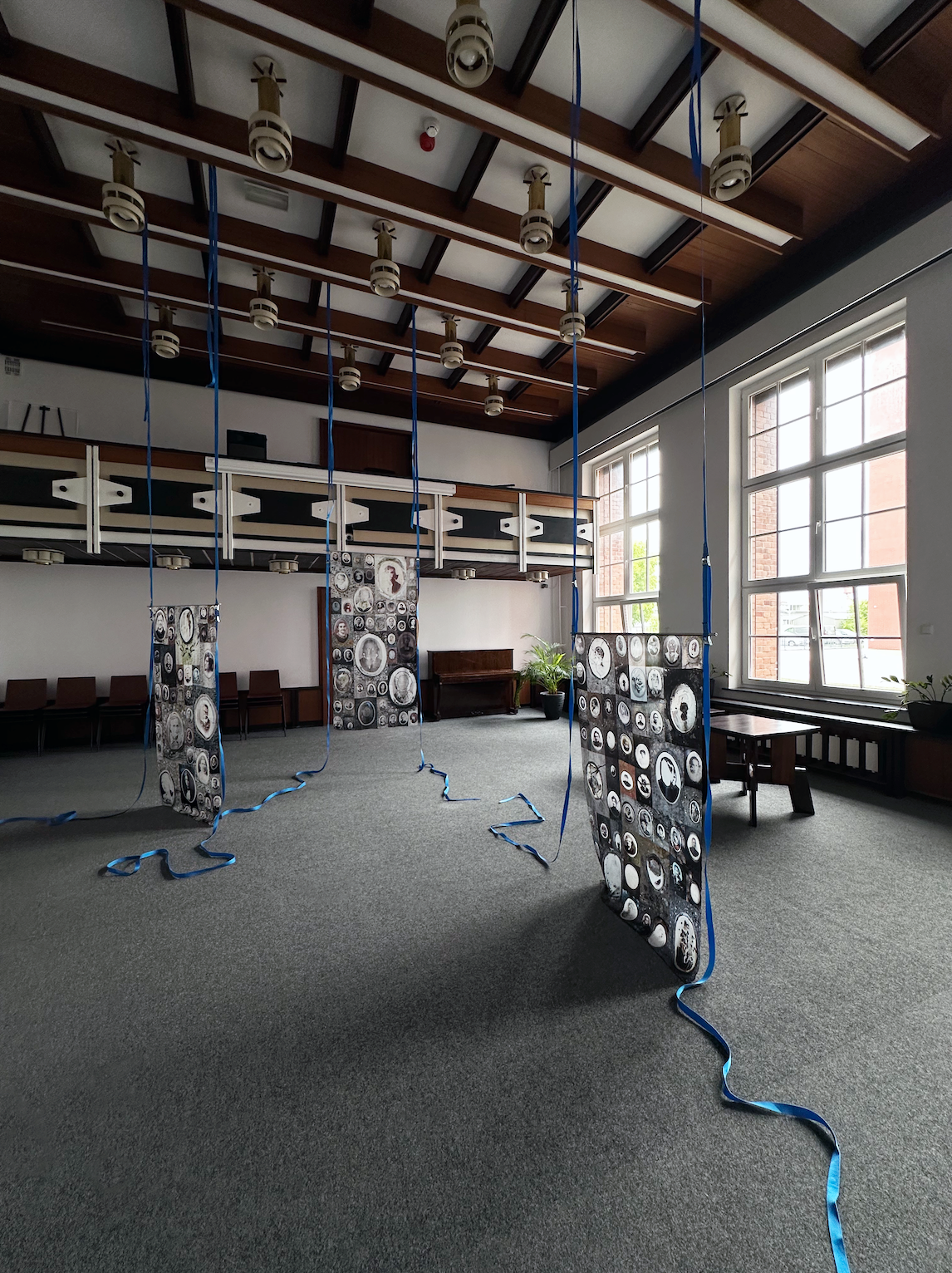

The installation takes the form of a collage of photographs of women’s grave medallions found in Belarus, Ukraine, and Poland. These cracked, chipped, weathered and broken medallions are printed on fabric. Taken in cemeteries in regions marked by ever-shifting borders and competing empires, the portraits are anonymous, yet hold traces of individual lives lost to official narratives. Through these fragmented images, I engage with the hidden histories of everyday life – the lives of women who did not take part in wars, but endured them. Their stories remain undocumented, obscured by memory practices inflected by conflict, ideology, and state power.
In this installation, I contrast traditional materials of remembrance like marble and concrete with the flexibility and resilience of silk. The portraits echo broken porcelain household items: fragile, damaged, and abandoned. Here, silk becomes both a carrier of memory and an act of resistance against forgetting. By creating these silk pieces, I reach toward a history beyond (state) borders – a history where women’s biographies have an assertive presence. Suspended and unstable, the work recalls something in between a domestic tablecloth and a monument – positioned between care and control.
This installation is ongoing. I continue to collect new portraits, adding new fragments with each exhibition. These silent witnesses re-enter visual history, remaining mute yet present, shaping a counter-memory of lived, but rarely recorded, experience.